



 UEFA Nations LeagueHome - Fixture

Fri, 25 Sept 20262:45 AMRound 1Ernst-Happel-Stadion
View match 
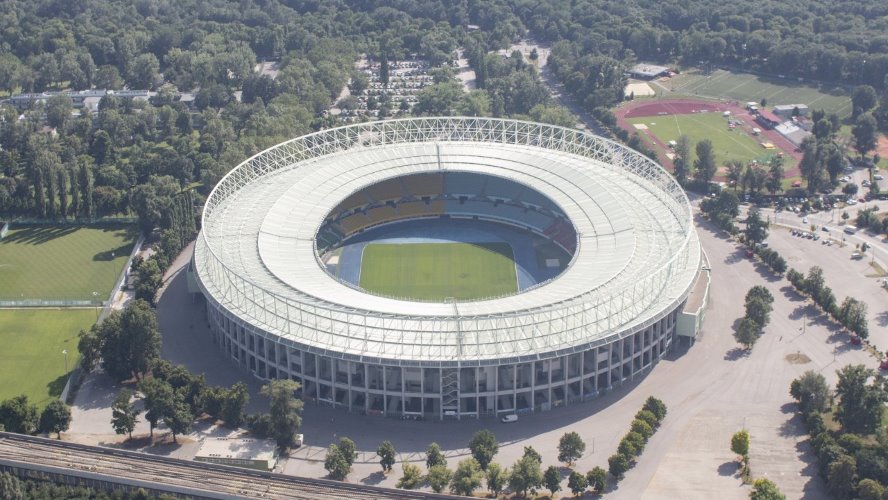
The Ernst Happel Stadion (About this sound Ernst-Happel-Stadion (help·info)) (Praterstadion until 1992, sometimes also called Wiener Stadion) in Leopoldstadt, the 2nd district of Austria's capital Vienna, is the largest stadium in Austria. It was built between 1929 and 1931 for the second Workers' Olympiad to the design of German architect Otto Ernst Schweizer. The stadium was renamed in honour of Ernst Happel following his death in 1992. The stadium hosted seven games in UEFA Euro 2008, including the final which saw Spain triumph over Germany.
The stadium is owned by the City of Vienna (Municipal Department 51 - Sports of the City of Vienna). It is managed by the Wiener Stadthalle Betriebs und Veranstaltungsgesellschaft m.b.H., a subsidiary of Wien Holding.
History 1928-1945 The foundation stone was laid in November 1928 in honor of the 10-year celebration of the Republic of Austria. The stadium was constructed in 23 months, from 1929 to 1931. It was built according to a design by the Tübingen architect Otto Ernst Schweizer and the second Workers' Olympiad. Schweizer also designed the adjacent Stadionbad (with 400,000 sq m, Europe's largest swimming pool). According to its location in Vienna's Prater, it was initially named Prater Stadium. It was a modern stadium at the time, particularly in Europe, because of its short discharge time of only 7 to 8 minutes. Initially the stadium had a capacity of approximately 60,000 people.
UEFA Nations LeagueHome - Fixture